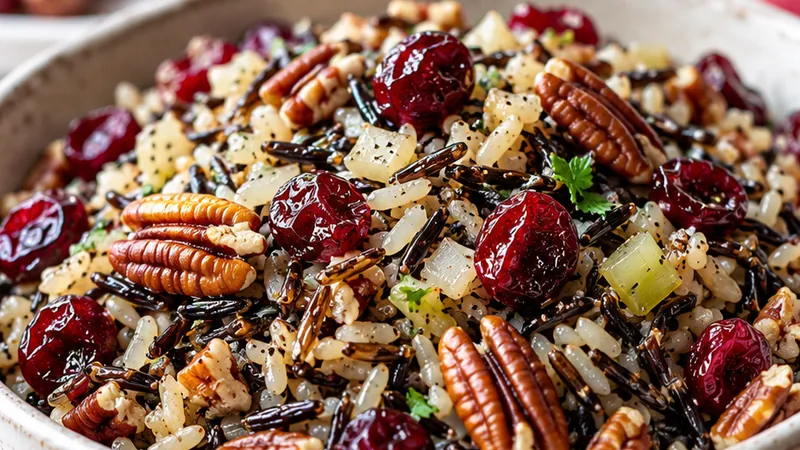
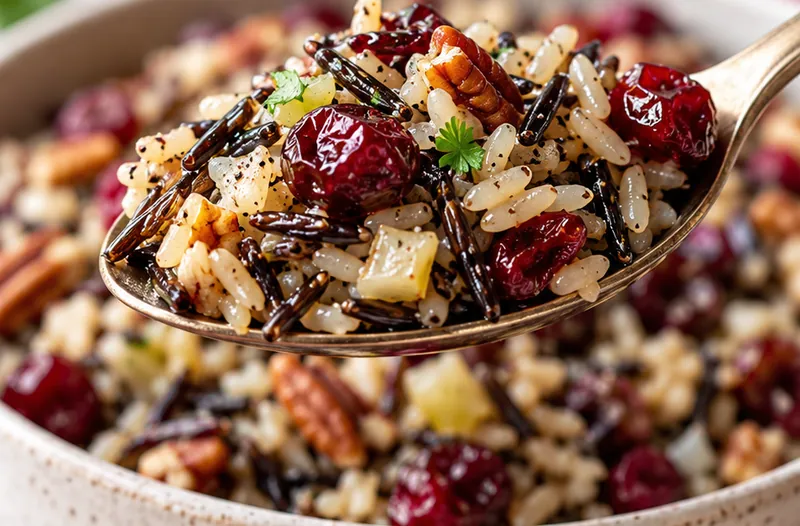
There is something so comforting about a big pot of wild rice simmering on the stove. The kitchen fills with a warm, earthy, almost toasted aroma, and then the butter hits the pan with the shallots and celery, and suddenly the whole house smells like the holidays. Each forkful of this pilaf gives you chewy, nutty grains, little bursts of sweet-tart cranberry, and the buttery crunch of toasted pecans.
This is the side dish I reach for when the oven is already crowded and I need something that can be made on the stovetop and still look beautiful on the table. It shines next to roast turkey, glazed ham, or a simple roasted chicken, and it holds up so well that you can make it a day ahead. It also happens to be naturally vegetarian if you use vegetable broth, so it covers plenty of guests at a holiday gathering.
 Save
If you have ever felt like the side dishes get lost next to the mashed potatoes and stuffing, this is the one that changes that. I started bringing it to Friendsgiving years ago, and now I am not allowed to show up without it. Someone always asks for the recipe, and someone else always goes back for thirds, usually while pretending they are just tidying up the serving spoon.
Wild Rice Pilaf With Cranberries And Pecans
Ingredients
Rice
Pilaf Base
Mix-Ins
Instructions
- Toast the Pecans
Heat a large, dry skillet over medium heat. Add the pecan halves and toast them for 4 to 5 minutes, stirring often, until they smell nutty and look a shade darker. Transfer them to a cutting board right away so they do not keep cooking in the hot pan, then roughly chop them once cool.
- Soak the Cranberries
Place the dried cranberries in a small bowl and pour the orange juice over them. Stir in the orange zest and set the bowl aside while you cook the rice. This short soak plumps the cranberries so they stay tender and juicy in the finished pilaf.
- Simmer the Wild Rice
Combine the rinsed wild rice, broth, bay leaf, and salt in a medium saucepan and bring to a boil over medium-high heat. Reduce the heat to low, cover with a tight-fitting lid, and simmer for 45 to 50 minutes, until the grains are tender and many have split open to show their pale centers. Start checking at 40 minutes, since wild rice varies by brand.
- Drain and Steam
Pour off any broth that has not been absorbed, then return the rice to the saucepan. Discard the bay leaf, cover the pot, and let the rice rest off the heat for 10 minutes. This resting time lets the grains finish steaming and keeps the pilaf fluffy rather than soggy.
- Soften the Vegetables
While the rice rests, melt the butter in the same large skillet over medium heat. Add the shallot and celery and cook for 6 to 7 minutes, stirring occasionally, until the vegetables are soft and the shallot looks translucent but has not browned.
- Bloom the Aromatics
Add the garlic, thyme, sage, and black pepper to the skillet. Stir constantly for about 1 minute, until the garlic is fragrant and the herbs smell warm and savory. Keep the heat at medium so the garlic does not burn and turn bitter.
- Combine the Rice and Vegetables
Add the rested wild rice to the skillet and toss gently with a wooden spoon or spatula until every grain is glossy and coated with the buttery vegetables. Let it cook for 2 minutes, stirring once or twice, so the rice soaks up the flavors and warms through.
- Fold in the Mix-Ins
Remove the skillet from the heat. Add the cranberries along with any orange juice left in the bowl, then fold in the parsley and most of the chopped pecans, saving a small handful for the top. Mixing these in off the heat keeps the pecans crunchy and the parsley bright green.
- Taste and Season
Taste the pilaf and add more salt and pepper as needed, since the amount will depend on how salty your broth is. If it tastes a little flat, a small squeeze of orange juice will brighten everything right up.
- Serve Warm
Spoon the pilaf into a warm serving bowl or onto a platter and scatter the reserved pecans over the top for a pretty finish. Serve it right away while warm, or let it sit at room temperature for up to 30 minutes if the rest of dinner needs a few more minutes.
Substitutions and variations
- Swap the pecans for toasted walnuts or sliced almonds if that is what you have in the pantry.
- Use dried cherries or golden raisins in place of the cranberries for a slightly different sweet note.
- Make it vegan by using vegetable broth and replacing the butter with olive oil or a plant-based butter.
- Add 8 ounces of sauteed cremini mushrooms to the pilaf base for a deeper, earthier flavor.
- Stir in 1 cup of diced roasted butternut squash at the end for extra color and fall flavor.
Chloe's tips
- Wild rice blends cook faster than pure wild rice, so follow the timing on your package and start checking early.
- Toast the pecans in a dry pan and move them off the heat immediately, since they can go from golden to burnt in under a minute.
- Use a wide skillet when combining the rice and vegetables so the grains stay fluffy instead of steaming into a sticky pile.
- Hold back the pecans and parsley until right before serving if you are making this ahead, which keeps them crisp and fresh.
How to store it
- Store leftovers in an airtight container in the refrigerator for up to 4 days.
- Freeze the pilaf without the pecans in a freezer-safe bag for up to 2 months, then thaw overnight in the refrigerator.
- Reheat on the stovetop over medium-low heat with 2 tablespoons of broth, stirring until warmed through, or microwave in a covered dish in 1-minute intervals.
- To make ahead, prepare the pilaf up to 2 days in advance, refrigerate it, and stir in the pecans and parsley after reheating.
Serving suggestions
This pilaf is wonderfully versatile and pairs with everything from a big holiday spread to a quiet Tuesday dinner.
- Roast turkey with herb gravy for Thanksgiving dinner
- Honey-glazed ham or pork tenderloin
- Simple lemon herb roasted chicken
- Stuffed into roasted acorn squash halves for a vegetarian main
- Served cold over baby spinach with a light vinaigrette for lunch
Frequently asked questions
Can I make wild rice pilaf ahead of time for Thanksgiving?
Yes, and it is one of the best make-ahead sides for the holidays. Prepare the pilaf up to 2 days in advance and refrigerate it without the pecans and parsley. Reheat it gently on the stove with a splash of broth, then stir in the pecans and parsley just before serving.
What is the difference between wild rice and a wild rice blend?
Pure wild rice is actually the seed of an aquatic grass, and it has long, dark grains with a chewy texture that take about 45 to 55 minutes to cook. A wild rice blend mixes it with brown, red, or other rice varieties and usually cooks a little faster. Either works well here, so just follow the timing on your package.
How do I know when wild rice is done cooking?
Most of the grains will have split open to reveal a pale interior, and the rice will taste tender with a slight chew. If it still seems hard, add a splash of hot broth and keep simmering for another 5 to 10 minutes. Drain any excess liquid once it is ready.
Can I make this pilaf vegan or gluten-free?
It is naturally gluten-free as long as your broth is certified gluten-free. For a vegan version, use vegetable broth and swap the butter for olive oil or a plant-based butter. The flavor stays rich and satisfying either way.
Let's get cooking!
I hope this wild rice pilaf with cranberries and pecans finds a happy spot on your table this season. It is simple enough for a weeknight, pretty enough for a holiday, and forgiving enough that you can make it ahead and actually enjoy your guests. Give it a try, make it your own with your favorite mix-ins, and do not be surprised when everyone starts asking you to bring it every year.