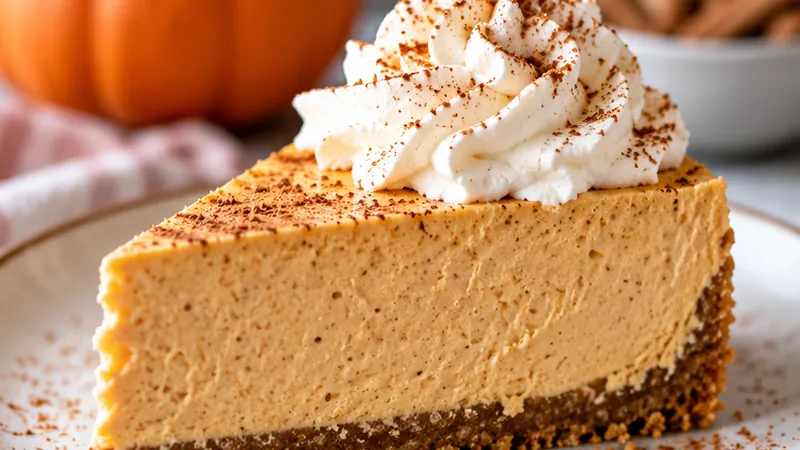
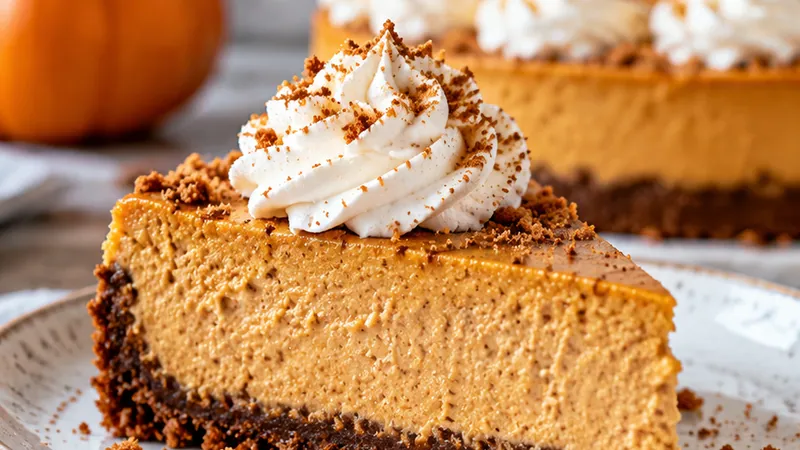
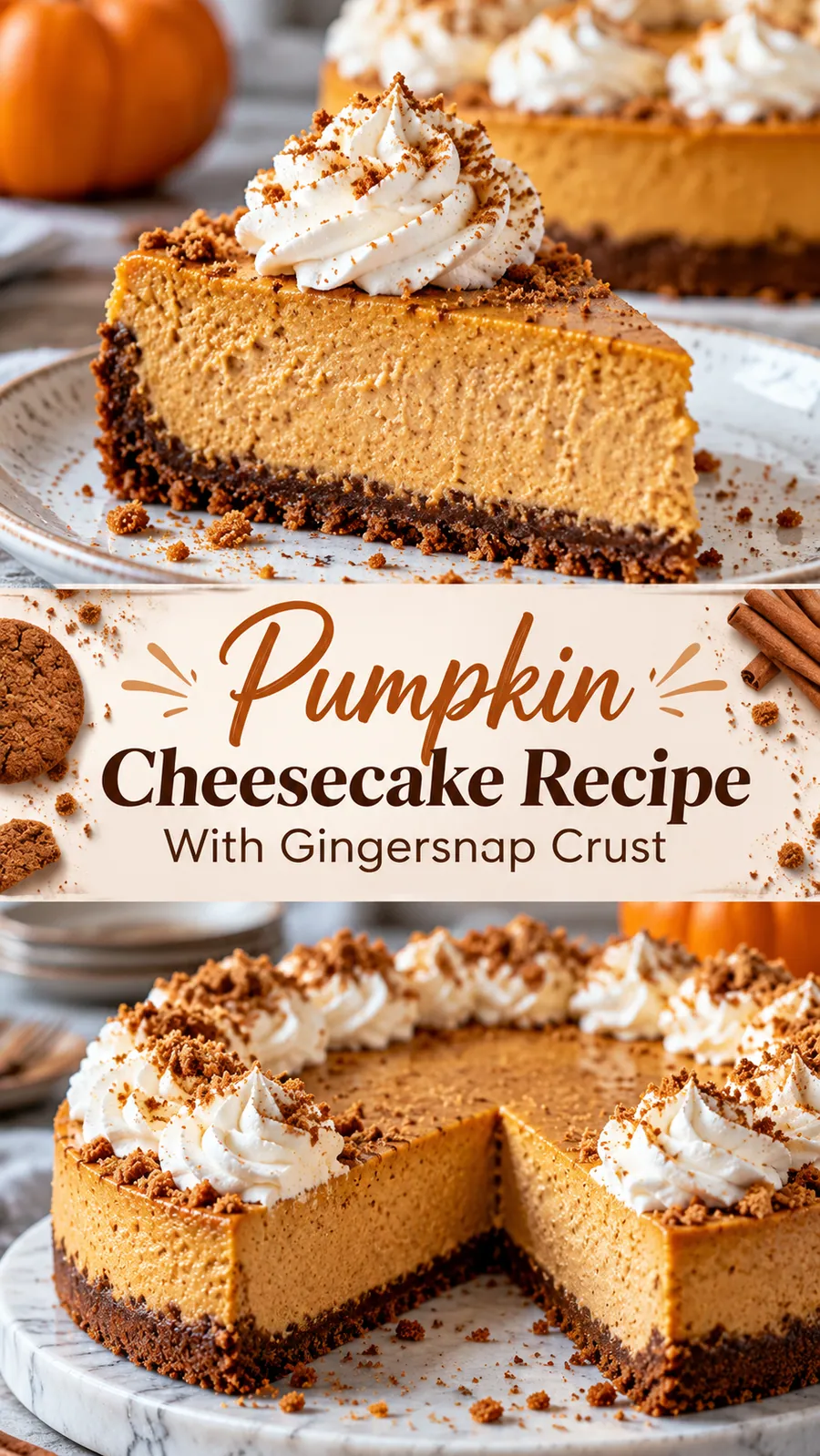
There is something about the first slice of pumpkin cheesecake that makes the whole kitchen go quiet. The gingersnap crust snaps gently under your fork, all buttery and warmly spiced, and then you hit that thick, velvety pumpkin layer that melts on your tongue like a cross between classic New York cheesecake and your favorite pumpkin pie. The aroma alone, with cinnamon, ginger, and a whisper of cloves drifting out of the oven, is enough to make everyone wander in asking when dessert is ready.
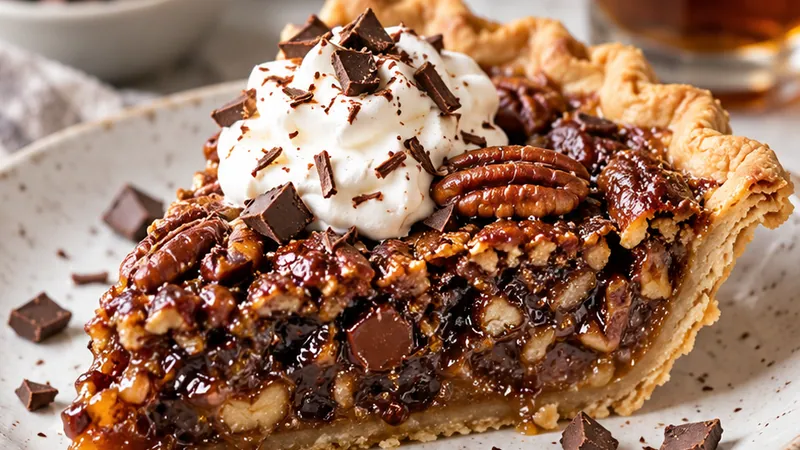
This is the cheesecake I make every November, and it has earned a permanent spot on our Thanksgiving table right next to the pecan pie. It is ideal for holiday gatherings because it actually tastes better after a long chill in the fridge, which means you can bake it a day or two ahead and free up your oven for the turkey and sides. It also travels well, so it is a wonderful choice when you are bringing dessert to a friend's house or a potluck.
 Save
If you have ever been nervous about cheesecake cracking or sinking, I promise this recipe is friendlier than it looks. I spent a few seasons tweaking the method, testing water baths, oven temperatures, and cooling times, until I landed on a version that comes out smooth on top nearly every single time. Pour yourself a cup of coffee, put on a cozy playlist, and let's make the dessert your family will be requesting for years to come.
Pumpkin Cheesecake Recipe With Gingersnap Crust
Ingredients
Gingersnap Crust
Pumpkin Cheesecake Filling
Whipped Cream Topping
Instructions
- Prep the oven and pan
Position a rack in the lower third of your oven and preheat to 350°F. Wrap the outside of a 9-inch springform pan with two layers of heavy-duty aluminum foil, pressing it snugly up the sides so no water can seep in during the water bath. Lightly grease the inside of the pan with butter or nonstick spray and line the bottom with a round of parchment paper.
- Make the gingersnap crust
In a medium bowl, stir together the crushed gingersnaps, chopped pecans if using, brown sugar, and salt. Pour in the melted butter and mix with a fork until every crumb is moistened and the mixture looks like damp sand that holds together when you squeeze a handful.
- Press and bake the crust
Tip the crumbs into the prepared pan and press them firmly into an even layer across the bottom and about 1 inch up the sides, using the flat bottom of a measuring cup to pack it tight. Bake for 10 minutes until fragrant and slightly darker, then set the pan on a wire rack to cool while you make the filling. Lower the oven temperature to 325°F.
- Beat the cream cheese
In a large bowl with a hand mixer, or in a stand mixer fitted with the paddle attachment, beat the softened cream cheese on medium-low speed for about 2 minutes until completely smooth with no lumps. Scrape down the sides and bottom of the bowl with a spatula, since hidden lumps of cold cream cheese are the most common cause of a grainy cheesecake.
- Add sugars, pumpkin, and sour cream
Add the granulated sugar and brown sugar and beat on medium-low for 1 to 2 minutes until creamy. Add the pumpkin puree, sour cream, flour, vanilla, cinnamon, ginger, nutmeg, cloves, and salt, then mix on low just until the batter is evenly orange and smooth, scraping the bowl once more.
- Mix in the eggs gently
Add the eggs one at a time on low speed, mixing only until each yolk disappears before adding the next. Avoid high speeds here, because whipping air into the batter causes the cheesecake to puff up in the oven and then crack as it cools. Finish by folding the batter a few times by hand with your spatula.
- Fill the pan and set up the water bath
Pour the filling over the cooled crust and smooth the top with an offset spatula, then gently tap the pan on the counter a few times to release air bubbles. Set the springform pan inside a large roasting pan and carefully pour hot tap water into the roasting pan until it reaches about halfway up the sides of the springform pan.
- Bake low and slow
Bake at 325°F for 75 to 85 minutes. The cheesecake is ready when the edges are set and slightly puffed, while the center 2 to 3 inches still wobbles like set gelatin when you give the pan a gentle nudge. An instant-read thermometer inserted halfway between the edge and center should read about 150°F.
- Cool gradually in the oven
Turn off the oven, crack the door open a few inches with a wooden spoon, and let the cheesecake rest inside for 1 hour. This slow cool-down prevents sudden temperature shifts that cause cracks. Then lift the springform pan out of the water bath, remove the foil, and run a thin knife around the edge to loosen the crust from the pan.
- Chill until firm
Let the cheesecake cool on a wire rack at room temperature for 1 more hour. Cover loosely with plastic wrap and refrigerate for at least 4 hours, or ideally overnight, until it is fully set and the flavors have deepened.
- Whip the topping
Just before serving, pour the cold heavy cream into a chilled bowl with the powdered sugar, vanilla, and cinnamon. Beat on medium-high speed for 2 to 3 minutes until medium-stiff peaks form that hold their shape when you lift the beaters.
- Garnish and slice
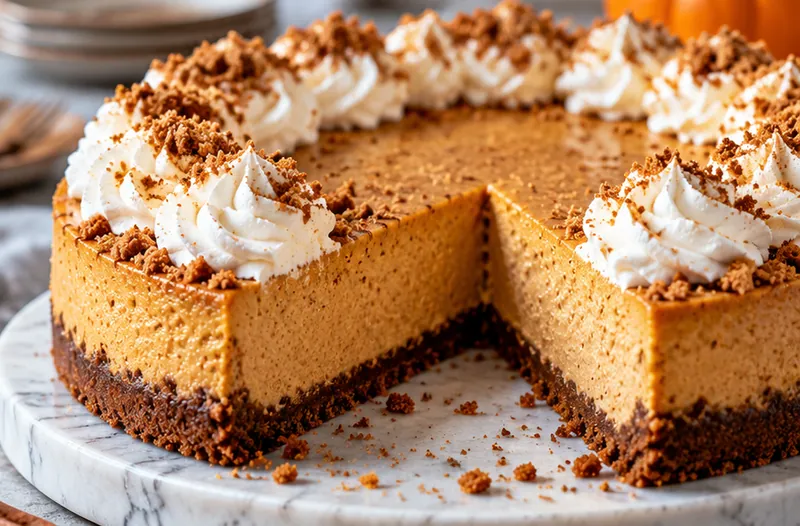
Release the springform ring and transfer the cheesecake to a serving plate. Pipe or spoon swirls of whipped cream around the edge, sprinkle with extra crushed gingersnaps and a light dusting of cinnamon, and slice with a long sharp knife dipped in hot water and wiped dry between each cut for clean, picture-perfect slices.
Substitutions and variations
- Swap the gingersnaps for graham crackers and add 1/2 teaspoon ground ginger to the crumbs if you want a milder, more classic crust.
- Use 3 3/4 teaspoons of store-bought pumpkin pie spice in place of the individual cinnamon, ginger, nutmeg, and cloves.
- Replace the sour cream with plain full-fat Greek yogurt for a slightly tangier filling with the same creamy texture.
- Make it gluten-free by using gluten-free gingersnap cookies and swapping the flour for 1 1/2 tablespoons of cornstarch.
- For a maple twist, replace the brown sugar in the filling with 1/3 cup pure maple syrup and reduce the granulated sugar to 3/4 cup.
Chloe's tips
- Set the cream cheese, eggs, and sour cream on the counter at least 1 to 2 hours before baking so the batter blends smoothly without overmixing.
- Blot the pumpkin puree between a few paper towels for a minute before adding it, which removes excess moisture and gives a denser, creamier slice.
- Crush the gingersnaps in a food processor for the finest, most even crumbs, or seal them in a zip-top bag and roll them with a rolling pin.
- Resist opening the oven door during the first hour of baking, since the rush of cool air can cause the cheesecake to sink or crack.
- If a small crack does appear, do not stress, because a generous swirl of whipped cream covers it beautifully.
How to store it
- Store the cheesecake covered in the refrigerator for up to 5 days, keeping the whipped cream off until you are ready to serve.
- Freeze the plain, chilled cheesecake whole or in slices by wrapping tightly in plastic wrap and then foil for up to 2 months.
- Thaw frozen cheesecake overnight in the refrigerator, never at room temperature, to keep the texture smooth and creamy.
- Leftover slices topped with whipped cream are best eaten within 1 to 2 days, as the cream softens the longer it sits.
Serving suggestions
This pumpkin cheesecake is rich enough to shine on its own, but a few simple extras make it feel extra special.
- A drizzle of warm salted caramel sauce and a sprinkle of flaky sea salt
- Candied pecans or maple-glazed walnuts scattered over the top
- A hot cup of coffee, chai latte, or spiced apple cider on the side
- A spoonful of bourbon whipped cream for an adults-only holiday treat
- Thin slices served on a Thanksgiving dessert board alongside pecan pie bars and apple crisp
Frequently asked questions
Why did my pumpkin cheesecake crack?
Cracks usually come from overmixing the eggs, baking at too high a temperature, or cooling the cheesecake too quickly. Mixing on low speed, using a water bath, and letting it cool slowly in the turned-off oven with the door cracked will help you get a smooth top.
Can I make this pumpkin cheesecake ahead of time?
Yes, and you really should. This cheesecake tastes best after chilling overnight, and it keeps well in the fridge for up to 5 days. Just add the whipped cream topping right before serving.
Do I have to use a water bath?
A water bath is strongly recommended because it keeps the oven humid and the heat gentle, which gives you a creamy texture without cracks. If you prefer to skip it, place a pan of hot water on the rack below the cheesecake instead, though the edges may set a little firmer.
Can I use fresh pumpkin instead of canned?
You can, but fresh pumpkin puree tends to be much wetter. Roast and puree a sugar pie pumpkin, then strain it in a fine mesh sieve or cheesecloth for at least an hour until it is as thick as canned puree, and measure out 1 3/4 cups.
How do I know when the cheesecake is done baking?
The edges should look set and slightly puffed while the center still jiggles gently when you nudge the pan. It will continue to firm up as it cools and chills, so pulling it out while it still wobbles is the key to a silky, creamy center.
Let's get cooking!
Once you pull this pumpkin cheesecake with gingersnap crust out of the fridge and cut that first creamy slice, you will see why it has become a holiday tradition in so many kitchens. It takes a little patience, but every step is simple, and the reward is a show-stopping dessert that tastes like cozy fall afternoons and happy family gatherings. So grab your springform pan, stock up on cream cheese, and give it a try this season. I just know it will become one of your most requested treats.