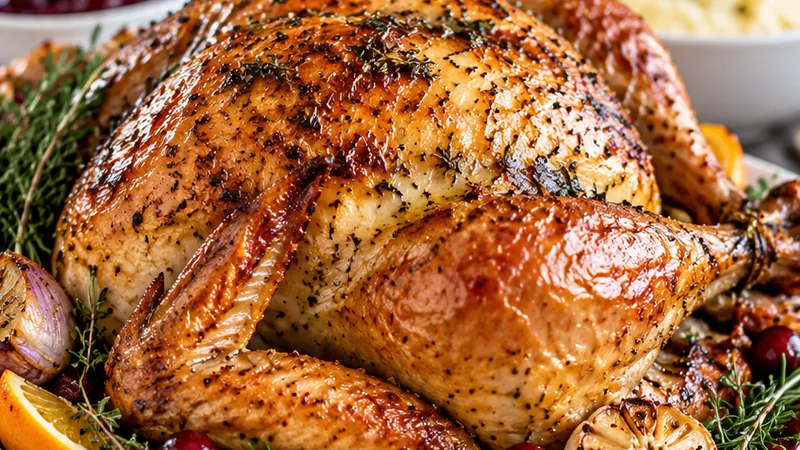
There is something magical about pulling a turkey out of the oven and hearing that skin crackle as you set it on the counter. A dry brine is the secret behind that moment. A simple rub of kosher salt, brown sugar, herbs, and citrus zest seasons the meat all the way through, so every slice is juicy and savory, and the skin roasts up deep golden and shatteringly crisp. Your whole kitchen will smell like sage, thyme, and butter.
This is the turkey to make when you want a showstopper for Thanksgiving, Friendsgiving, or a cozy Sunday dinner without wrestling a giant pot of wet brine. You rub the bird a day or two ahead, tuck it in the fridge, and let time do the work. On the big day all you have to do is brush on some butter, slide it into the oven, and focus on the sides.
 Save
I switched to dry brining years ago after one too many wet brine spills in a crowded fridge, and I have never looked back. The first year I tried it, my aunt, who has hosted Thanksgiving for decades, asked for the recipe before dessert was even on the table. If you have ever been nervous about cooking a whole turkey, this method is forgiving, simple, and honestly the easiest way to look like a pro.
Easy Dry Brined Roast Turkey Recipe
Ingredients
Dry Brine
Herb Butter
Aromatics and Roasting
Instructions
- Mix the dry brine
In a small bowl, stir together the kosher salt, brown sugar, dried thyme, dried sage, black pepper, garlic powder, and orange zest. Rub the mixture between your fingers to release the oils in the zest and break up any clumps of sugar.
- Prep and dry the turkey
Set the thawed turkey on a rimmed baking sheet. Remove the neck and giblet bag from the cavities and save them for gravy if you like. Pat the turkey very dry inside and out with paper towels, since a dry surface helps the salt absorb evenly and gives you crispier skin.
- Apply the brine
Gently slide your fingers under the skin of the breast and thighs to loosen it without tearing. Rub about one third of the brine mixture directly onto the meat under the skin, then sprinkle the rest evenly over the outside of the bird and a little inside the cavity. Aim for a light, even coating rather than heavy patches.
- Refrigerate uncovered
Place the turkey breast side up on a wire rack set inside the rimmed baking sheet and refrigerate it uncovered for 24 to 72 hours. The salt first draws out moisture and then gets reabsorbed, seasoning the meat deeply, while the cold air dries the skin so it roasts up crisp. Two days is the sweet spot.
- Bring to room temperature
About 1 hour before roasting, take the turkey out of the fridge so it can lose some of its chill. Do not rinse it. If you see any moisture on the surface, blot it with paper towels. Adjust an oven rack to the lowest position and preheat the oven to 425°F.
- Make the herb butter
In a small bowl, mash the softened butter with the minced garlic, fresh sage, thyme, and rosemary until well combined. Do not add salt, because the turkey is already perfectly seasoned from the dry brine.
- Stuff with aromatics and butter
Tuck the quartered onion, orange, halved garlic head, and herb sprigs into the turkey cavity. Rub about half of the herb butter under the breast skin and spread the rest over the outside of the bird. Tuck the wing tips behind the back and tie the legs together loosely with kitchen twine.
- Set up the roasting pan
Scatter the carrots and celery in the bottom of a large roasting pan and pour in the chicken broth. Set a roasting rack over the vegetables and place the turkey on it breast side up. The vegetables and broth flavor the drippings for gravy and keep them from scorching.
- Roast hot, then lower the heat
Roast the turkey at 425°F for 30 minutes to jump start browning. Then reduce the oven temperature to 325°F and continue roasting for 2 to 2 1/2 hours more, about 13 minutes per pound total. If the breast or wing tips brown too quickly, tent those areas loosely with foil. Add a splash of broth or water to the pan if it looks dry.
- Check the temperature
Start checking the temperature about 30 minutes before you expect it to be done. Insert an instant read thermometer into the thickest part of the breast without touching bone; it should read 160°F. The thickest part of the thigh should read at least 170°F. The temperature will continue to rise as it rests.
- Rest before carving
Transfer the turkey to a cutting board, tent it loosely with foil, and let it rest for 30 to 45 minutes. Resting lets the juices settle back into the meat so they stay in the slices instead of running onto the board. Use this time to make gravy from the pan drippings.
- Carve and serve
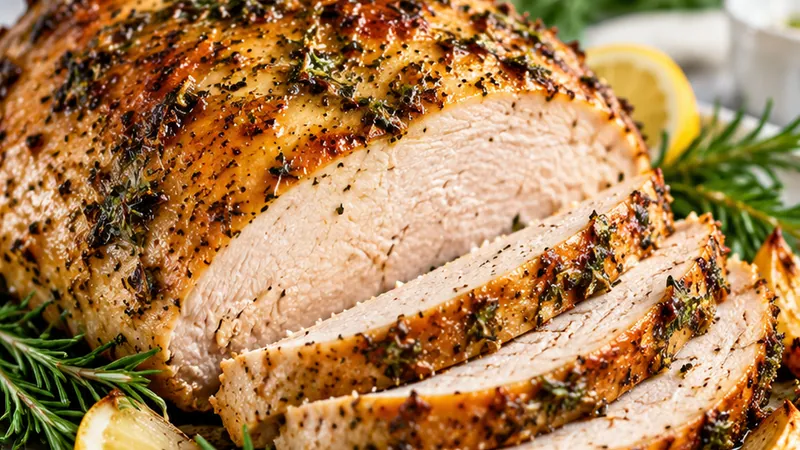
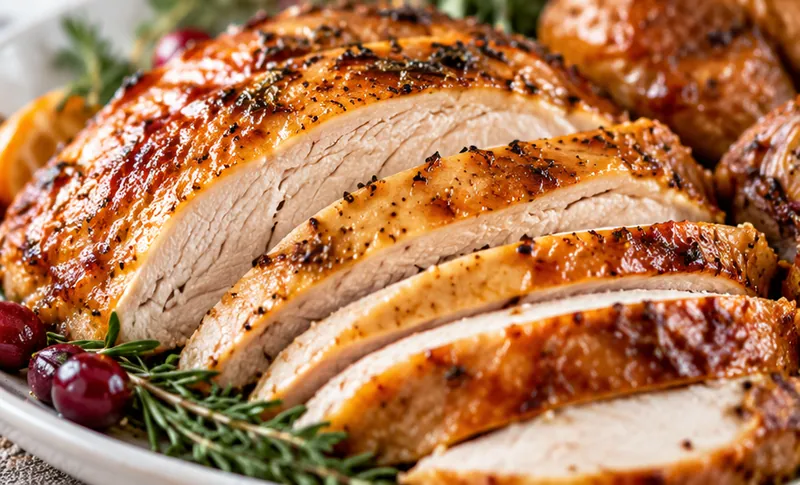
Remove the twine and aromatics. Carve off the legs and thighs, then slice each breast off the bone in one piece and cut it crosswise into thick slices. Arrange the meat on a warm platter, garnish with fresh herbs and orange slices, and serve right away.
Substitutions and variations
- If you only have table salt, use about half the amount of Diamond Crystal kosher salt, since table salt is much denser and can make the turkey too salty.
- Swap the orange zest for lemon zest for a brighter, more classic herb flavor.
- Use olive oil or ghee instead of butter if you need a dairy-free option, and the skin will still crisp beautifully.
- Add 1 teaspoon smoked paprika to the dry brine for a subtle smoky flavor and an even deeper golden color.
- This method works for a bone-in turkey breast too; use about 2 tablespoons Diamond Crystal salt for a 5 to 6 pound breast and roast until the breast reaches 160°F.
Chloe's tips
- Measure your salt by brand, since Diamond Crystal and Morton kosher salt have very different saltiness by volume.
- Leave the turkey uncovered in the fridge for the crispiest skin, and place it on the bottom shelf so nothing drips onto other foods.
- Make sure the turkey is fully thawed before dry brining; allow about 24 hours in the fridge for every 4 to 5 pounds.
- Taste your pan drippings before seasoning the gravy, because they will already be well salted from the brine.
- Trust a thermometer over the clock, since oven temperatures and turkey sizes vary.
How to store it
- Refrigerate leftover turkey in an airtight container within 2 hours of cooking and enjoy it within 3 to 4 days.
- Freeze sliced turkey in freezer bags with a splash of broth for up to 3 months, then thaw overnight in the fridge.
- Reheat slices in a covered baking dish with a few tablespoons of broth at 325°F for 15 to 20 minutes until heated through.
- Save the carcass in the freezer to make rich homemade turkey stock later.
Serving suggestions
This juicy roast turkey is the star of any holiday table, and it pairs beautifully with all the classic sides.
- Creamy make ahead mashed potatoes with plenty of pan gravy
- Homemade cranberry sauce with orange zest
- Classic sausage stuffing or Southern cornbread dressing
- Green bean casserole or maple roasted Brussels sprouts
- Soft dinner rolls with honey butter
- Leftover turkey sandwiches with cranberry sauce and stuffing the next day
Frequently asked questions
Do I rinse the turkey after dry brining?
No, do not rinse it. The salt has already been absorbed into the meat, and rinsing would wet the skin, keep it from crisping, and spread bacteria around your sink. Just blot away any surface moisture with paper towels.
Can I dry brine a frozen turkey?
The turkey needs to be fully thawed first so the salt can penetrate the meat. If it is still partially frozen, you can apply the brine as soon as the skin and outer meat are thawed, but give it the full 48 hours in the fridge afterward.
How long should I dry brine my turkey?
At least 24 hours and up to 72 hours. Around 48 hours gives the best balance of deep seasoning and crisp skin. Less than 24 hours still helps, but the flavor will mostly stay near the surface.
Will a dry brined turkey taste too salty?
Not if you measure carefully. The recipe uses about 1 tablespoon of Diamond Crystal kosher salt per 2 1/2 pounds of turkey, which seasons the meat evenly without making it salty. Just skip extra salt in the herb butter and taste the gravy before seasoning.
Why is my turkey skin not crispy?
The most common reasons are covering the turkey in the fridge, not patting it dry, or basting too often. Leave it uncovered during brining, blot it dry before roasting, and start at 425°F for that crackly golden finish.
Let's get cooking!
Once you try this easy dry brined roast turkey, you may never go back to wet brining again. With just a little salt, a few herbs, and some time in the fridge, you get the juiciest, most flavorful turkey with skin so crisp everyone will be reaching for it. Give yourself the gift of a calm holiday kitchen, gather your favorite people around the table, and enjoy every delicious bite. Happy roasting!